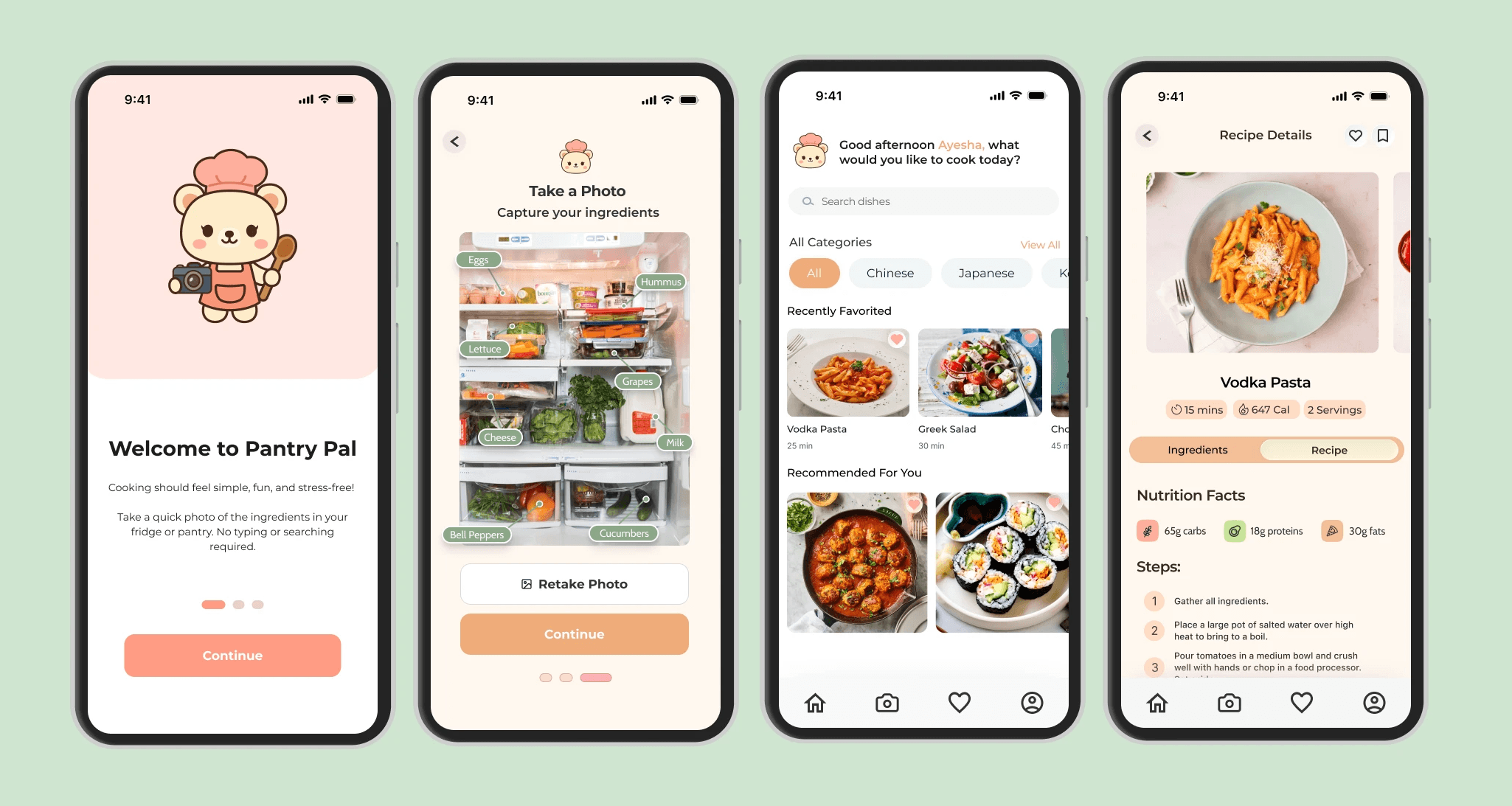
Pantry Pal is a AI-powered pantry app designed to make cooking more accessible and affordable by helping users track ingredients, reduce food waste, and create meals using what they already have.
Pantry Pal is a AI-powered pantry app designed to make cooking more accessible and affordable by helping users track ingredients, reduce food waste, and create meals using what they already have.
Roles
UX Designer
UI Designer
Product Strategist
Roles
UX Designer
UI Designer
Product Strategist
Roles
UX Designer
UI Designer
Product Strategist
Team Members
Jennie Le,
Audrey Ostrom
Anvitha Goli
Alison C.
Team Members
Jennie Le,
Audrey Ostrom
Anvitha Goli
Alison C.
Team Members
Jennie Le
Audrey Ostrom
Anvitha Goli
Alison C.
Duration
4 Weeks
Duration
4 Weeks
Skills
Interaction Design
Prototyping
Design Systems
Wireframing
Skills
Interaction Design
Prototyping
Design Systems
Wireframing
Skills
Interaction Design
Prototyping
Design Systems
Wireframing
Duration
4 Weeks
The Problem
The Problem
For many students, busy households, and budget-conscious individuals, cooking is more than just making meals, it’s a daily responsibility tied to time, money, and well-being.
For many students, busy households, and budget-conscious individuals, cooking is more than just making meals, it’s a daily responsibility tied to time, money, and well-being.
For many students, busy households, and budget-conscious individuals, cooking is more than just making meals, it’s a daily responsibility tied to time, money, and well-being.
Yet, managing ingredients, planning meals, and keeping track of what’s already in the pantry can feel overwhelming, often leading to unnecessary food waste and added stress.
This project was born from shared experiences of forgotten groceries, limited budgets, and the desire to cook more sustainably, while lacking tools that make everyday cooking feel simple, accessible, and intentional.
Yet, managing ingredients, planning meals, and keeping track of what’s already in the pantry can feel overwhelming, often leading to unnecessary food waste and added stress.
This project was born from shared experiences of forgotten groceries, limited budgets, and the desire to cook more sustainably, while lacking tools that make everyday cooking feel simple, accessible, and intentional.
Yet, managing ingredients, planning meals, and keeping track of what’s already in the pantry can feel overwhelming, often leading to unnecessary food waste and added stress.
This project was born from shared experiences of forgotten groceries, limited budgets, and the desire to cook more sustainably, while lacking tools that make everyday cooking feel simple, accessible, and intentional.

How Might We…
"How might we make managing your fridge feel simple, visual, and enjoyable?"
How Might We?
People often forget what ingredients they already own, leading to food waste and decision fatigue.
To achieve this, our team focused on a set of core design objectives that guided every decision throughout the sprint.
"How might we make managing your fridge feel simple, visual, and enjoyable?"
"How might we make managing your fridge feel simple, visual, and enjoyable?"
People often forget what ingredients they already own, leading to food waste and decision fatigue. Existing apps rely heavily on manual entry, creating friction and low retention.
To achieve this, our team focused on a set of core design objectives that guided every decision throughout the sprint.
People often forget what ingredients they already own, leading to food waste and decision fatigue. Existing apps rely heavily on manual entry, creating friction and low retention.
To achieve this, our team focused on a set of core design objectives that guided every decision throughout the sprint.
How Might We
Reduce Friction in Food Awareness
Help users quickly understand what food they already have without requiring manual input or long setup flows. By prioritizing visual capture and confirmation over typing.
Reduce Friction in Food Awareness
Help users quickly understand what food they already have without requiring manual input or long setup flows. By prioritizing visual capture and confirmation over typing.
Reduce Friction in Food Awareness
Help users quickly understand what food they already have without requiring manual input or long setup flows. By prioritizing visual capture and confirmation over typing.
Support Confident, Low-Stress Decision Making
Through personalized recommendations and flexible filtering, the app helps users move from “What should I cook?” to a confident choice in seconds.
Support Confident, Low-Stress Decision Making
Through personalized recommendations and flexible filtering, the app helps users move from “What should I cook?” to a confident choice in seconds.
Support Confident, Low-Stress Decision Making
Through personalized recommendations and flexible filtering, the app helps users move from “What should I cook?” to a confident choice in seconds.
Build Trust Through User Control & Transparency
Balance automation with human oversight by allowing users to confirm, edit, and customize detected ingredients and preferences.
Build Trust Through User Control & Transparency
Balance automation with human oversight by allowing users to confirm, edit, and customize detected ingredients and preferences.
The Research
The Research
The Research
Understanding user goals and pain points.
Understanding user goals and pain points.
Understanding user goals and pain points.
Research Procedures & Statistics
We listened to 20+ students and busy home cooks—and their frustration was undeniable.
Through 25 user surveys and 3 user interviews, we gathered insights from people with diverse lifestyles and budgets to better understand challenges around meal planning, pantry organization, food waste, and the tools they wish existed to make cooking easier and more sustainable.
Research Procedures & Statistics
We listened to 20+ students and busy home cooks—and their frustration was undeniable.
Through 25 user surveys and 3 user interviews, we gathered insights from people with diverse lifestyles and budgets to better understand challenges around meal planning, pantry organization, food waste, and the tools they wish existed to make cooking easier and more sustainable.
Research Procedures & Statistics
We listened to 20+ students and busy home cooks—and their frustration was undeniable.
Through 25 user surveys and 3 user interviews, we gathered insights from people with diverse lifestyles and budgets to better understand challenges around meal planning, pantry organization, food waste, and the tools they wish existed to make cooking easier and more sustainable.
68%
of participants reported forgetting ingredients they already owned
68%
of participants reported forgetting ingredients they already owned
68%
of participants reported forgetting ingredients they already owned
72%
felt meal planning was stressful or time-consuming
72%
felt meal planning was stressful or time-consuming
72%
felt meal planning was stressful or time-consuming
80%
of people don’t know what’s in their fridge when grocery shopping.
80%
of people don’t know what’s in their fridge when grocery shopping.
80%
of people don’t know what’s in their fridge when grocery shopping.
60%
of food waste happens because food is forgotten or unused in fridges
60%
of food waste happens because food is forgotten or unused in fridges
60%
of food waste happens because food is unused in fridges
User Interviews
User Interviews
User Interviews
Feedback on reducing decision fatigue and improving visibility into available ingredients
Feedback on reducing decision fatigue and improving visibility into available ingredients
Feedback on reducing decision fatigue and improving visibility into available ingredients
Users shared that cooking often starts with good intentions but quickly becomes stressful when they can’t remember what’s in their fridge or pantry. Many described decision fatigue after long days and said they wanted a tool that felt supportive rather than overwhelming.
Users shared that cooking often starts with good intentions but quickly becomes stressful when they can’t remember what’s in their fridge or pantry. Many described decision fatigue after long days and said they wanted a tool that felt supportive rather than overwhelming.
Users shared that cooking often starts with good intentions but quickly becomes stressful when they can’t remember what’s in their fridge or pantry. Many described decision fatigue after long days and said they wanted a tool that felt supportive rather than overwhelming.
“I wish I could just see everything in my fridge at once and get ideas without having to think too much.”
“I wish I could just see everything in my fridge at once and get ideas without having to think too much.”
“I wish I could just see everything in my fridge at once and get ideas without having to think too much.
“Most cooking apps feel overwhelming. I want something simple that works with what I already have.”
“Most cooking apps feel overwhelming. I want something simple that works with what I already have.”
“Most cooking apps feel overwhelming. I want something simple that works with what I already have.”
“I usually buy groceries and then forget what I already have, so I end up wasting food without realizing it."
“I usually buy groceries and then forget what I already have, so I end up wasting food without realizing it."
“I usually buy groceries and then forget what I already have, so I end up wasting food without realizing it."
Research Synthesis
Research Synthesis
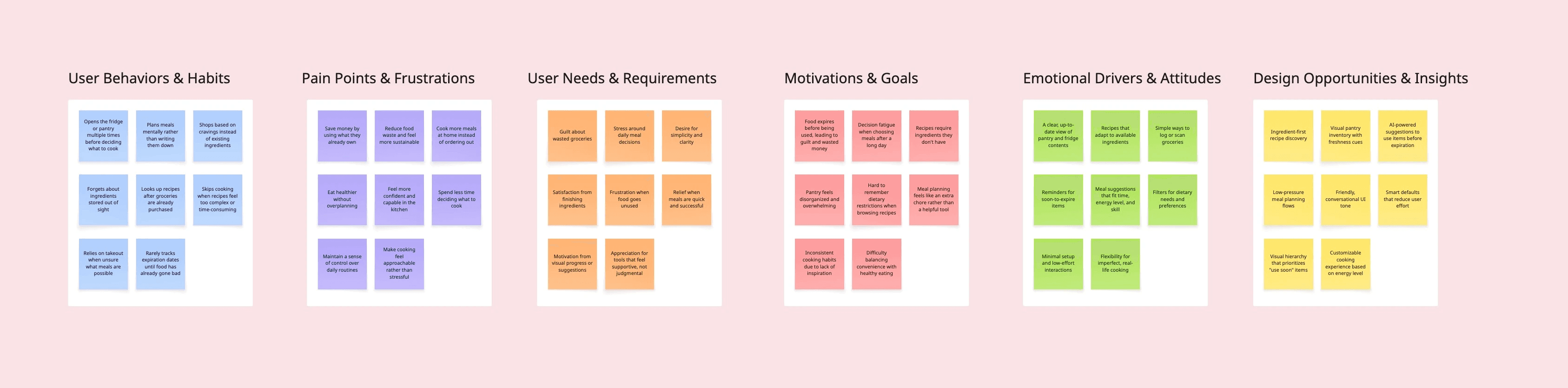
Sorting through the notes, quotes, observations, and research data by creating an affinity map.
Sorting through the notes, quotes, observations, and research data by creating an affinity map.
Sorting through the notes, quotes, observations, and research data by creating an affinity map.
Competitive Analysis
Competitive Analysis
Current food apps fail to support everyday cooking with the ingredients users already have. Recipe platforms often suggest meals that require extra ingredients, while grocery apps encourage users to buy more rather than reduce waste.
Because these tools are not connected, users still struggle to decide what to cook and often forget ingredients they already own. This leads to decision fatigue, wasted food, and unnecessary spending.
Current food apps fail to support everyday cooking with the ingredients users already have. Recipe platforms often suggest meals that require extra ingredients, while grocery apps encourage users to buy more rather than reduce waste.
Because these tools are not connected, users still struggle to decide what to cook and often forget ingredients they already own. This leads to decision fatigue, wasted food, and unnecessary spending.
Current food apps fail to support everyday cooking with the ingredients users already have. Recipe platforms often suggest meals that require extra ingredients, while grocery apps encourage users to buy more rather than reduce waste.
Because these tools are not connected, users still struggle to decide what to cook and often forget ingredients they already own. This leads to decision fatigue, wasted food, and unnecessary spending.


Research Overview
Research Overview

Challenges in Finding Relevant Recipes
Users often struggle to find recipes that fit the ingredients they already have, dietary restrictions, or time constraints, making cooking feel overwhelming or inaccessible.
Challenges in Finding Relevant Recipes
Users often struggle to find recipes that fit the ingredients they already have, dietary restrictions, or time constraints, making cooking feel overwhelming or inaccessible.
Challenges in Finding Relevant Recipes
Users often struggle to find recipes that fit the ingredients they already have, dietary restrictions, or time constraints, making cooking feel overwhelming or inaccessible

Lack of Guidance and Personalized Recommendations
Many users don’t know where to start when planning meals or trying new recipes, leading to repetitive meals and missed opportunities to use ingredients efficiently.
Lack of Guidance and Personalized Recommendations
Many users don’t know where to start when planning meals or trying new recipes, leading to repetitive meals and missed opportunities to use ingredients efficiently.
Lack of Guidance and Personalized Recommendations
Many users don’t know where to start when planning meals or trying new recipes, leading to repetitive meals and missed opportunities to use ingredients efficiently.

Frustrating and Cluttered Cooking Platforms
Mainstream recipe apps often overwhelm users with ads, irrelevant content, poorly organized features, leaving them frustrated and less motivated to cook.
Frustrating and Cluttered Cooking Platforms
Mainstream recipe apps often overwhelm users with ads, irrelevant content, poorly organized features, leaving them frustrated and less motivated to cook.
Frustrating and Cluttered Cooking Platforms
Mainstream recipe apps often overwhelm users with ads, irrelevant content, poorly organized features, leaving them frustrated and less motivated to cook.
User Journey Flow Map
User Journey Flow Map
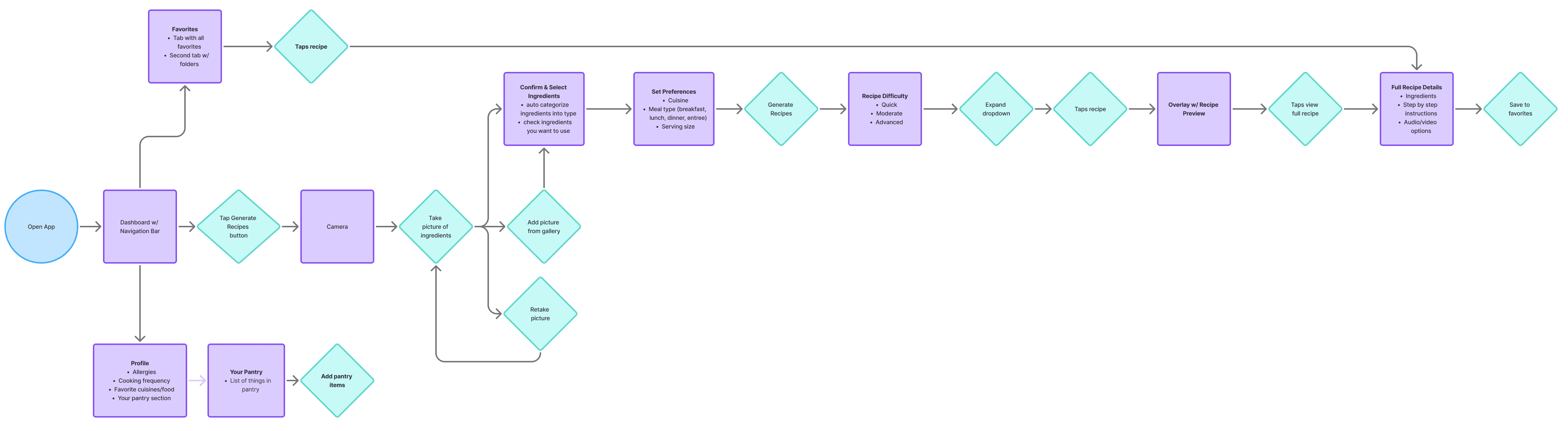
Mapping the user flow.
Mapping the user flow.
Mapping the user flow.
Based on research, Pantry Pal users prioritize quick access to nearby food resources and saving reliable information for later use. The user journey begins with a simple onboarding process and revisiting saved resources, followed by discovering food pantries, viewing pantry details, saving locations, revisiting saved resources for future planning.
Based on research, Pantry Pal users prioritize quick access to nearby food resources and saving reliable information for later use. The user journey begins with a simple onboarding process and revisiting saved resources, followed by discovering food pantries, viewing pantry details, saving locations, revisiting saved resources for future planning.
Low Fidelity Wireframes
Low Fidelity Wireframes
Going back to the basics.
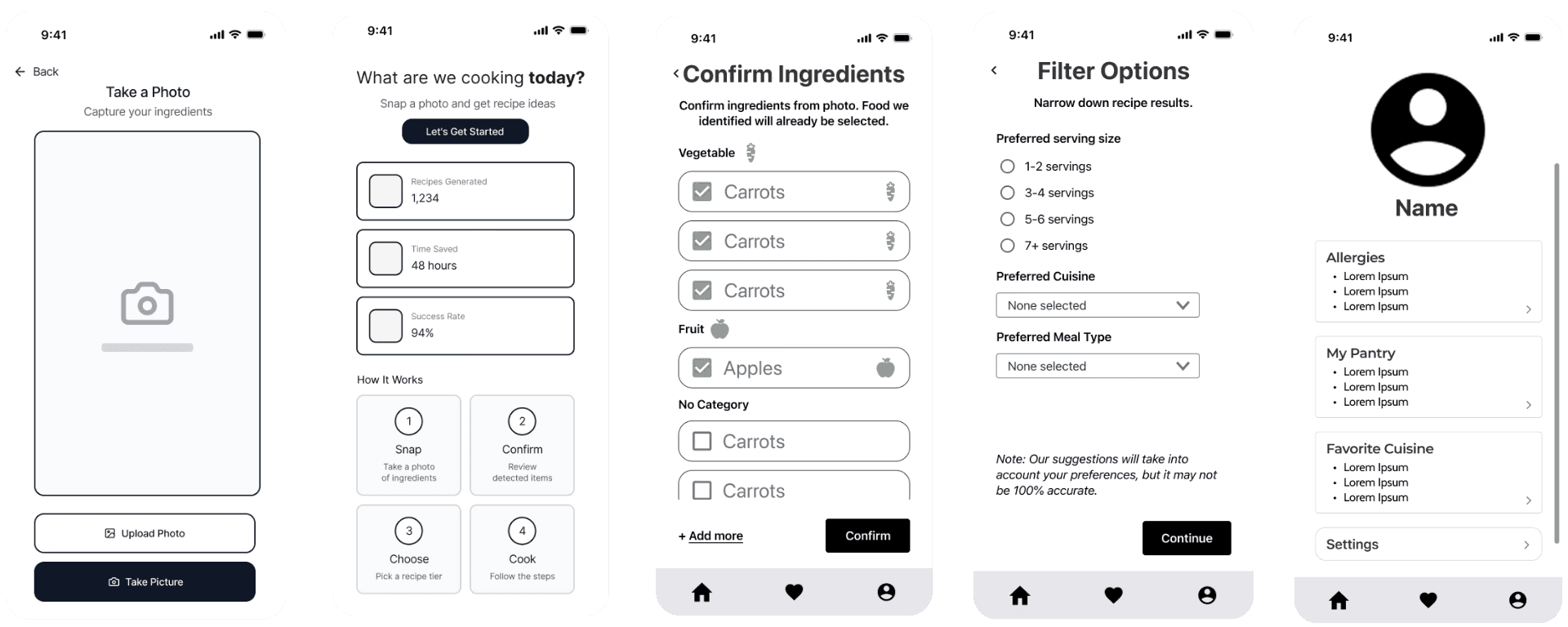
At this stage, I narrowed the Pantry Pal prototype to the Home, Profile, and Pantry screens and gathered early user feedback. I guided users through the prototype to observe:
How intuitive the layout felt
What features or information they felt were missing
Their overall experience navigating the screens
At this stage, I narrowed the Pantry Pal prototype to the Home, Profile, and Pantry screens and gathered early user feedback. I guided users through the prototype to observe:
How intuitive the layout felt
What features or information they felt were missing
Their overall experience navigating the screens
At this stage, I narrowed the Pantry Pal prototype to the Home, Profile, and Pantry screens and gathered early user feedback. I guided users through theprototype to observe:
How intuitive the layout felt
What features or information they felt were missing
Their overall experience navigating the screens
Wireframe Outcomes:
Positive: The overall layout was generally well received, and users felt the main flow of taking a photo and confirming ingredients was clear and easy to follow.
Negative: Some screens felt overwhelming due to the amount of information and choices presented at once. Users found certain steps less intuitive, such as navigating long ingredient lists, understanding navigation icons without labels, and encountering multiple options before seeing recipe results. This made the experience feel slightly heavy for first-time users.
Wireframe Outcomes:
Positive: The overall layout was generally well received, and users felt the main flow of taking a photo and confirming ingredients was clear and easy to follow.
Negative: Some screens felt overwhelming due to the amount of information and choices presented at once. Users found certain steps less intuitive, such as navigating long ingredient lists, understanding navigation icons without labels, and encountering multiple options before seeing recipe results. This made the experience feel slightly heavy for first-time users.
Wireframe Outcomes:
Positive: The overall layout was generally well received, and users felt the main flow of taking a photo and confirming ingredients was clear and easy to follow.
Negative: Some screens felt overwhelming due to the amount of information and choices presented at once. Users found certain steps less intuitive, such as navigating long ingredient lists, understanding navigation icons without labels, and encountering multiple options before seeing recipe results. This made the experience feel slightly heavy for first-time users.
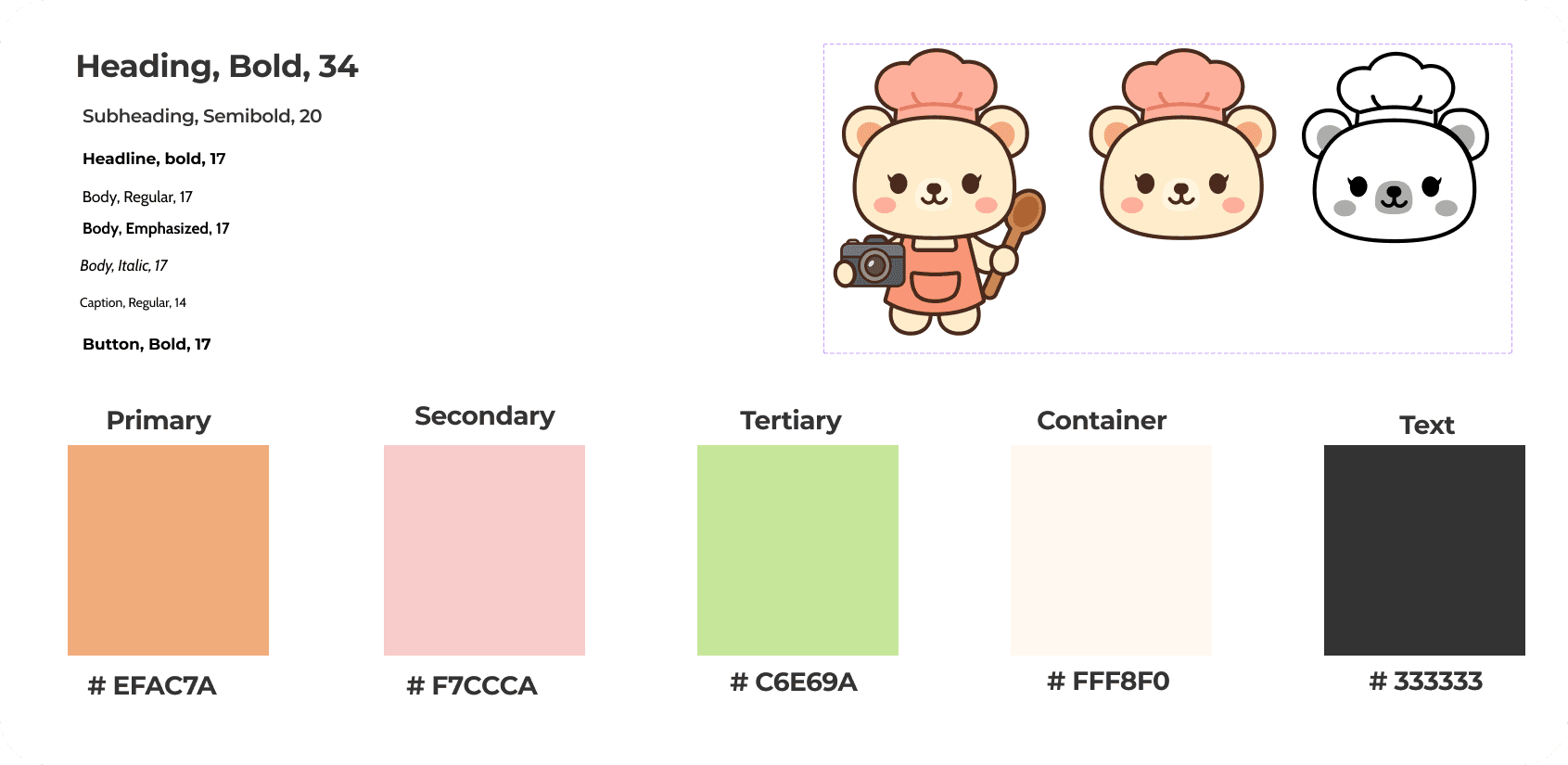
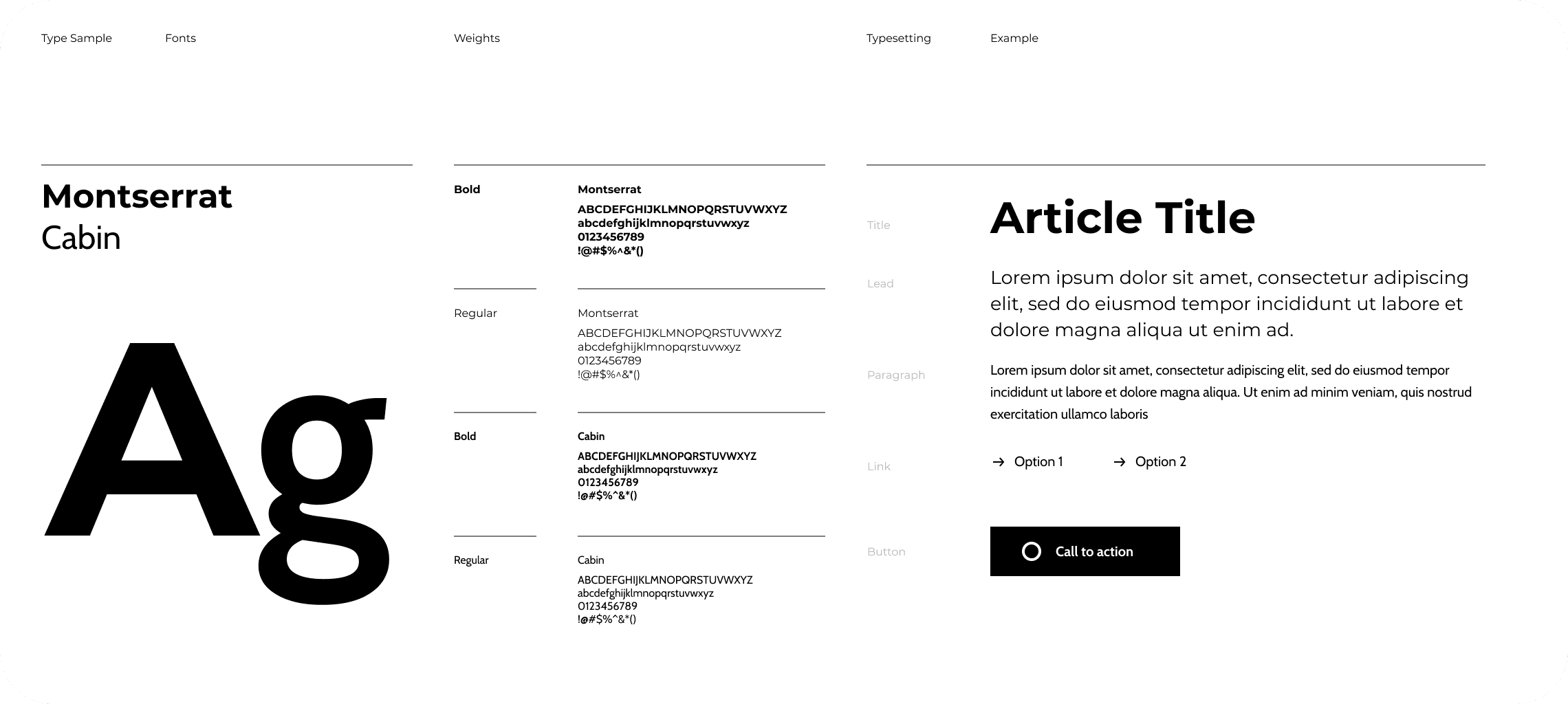
Branding and Design System
Branding and Design System
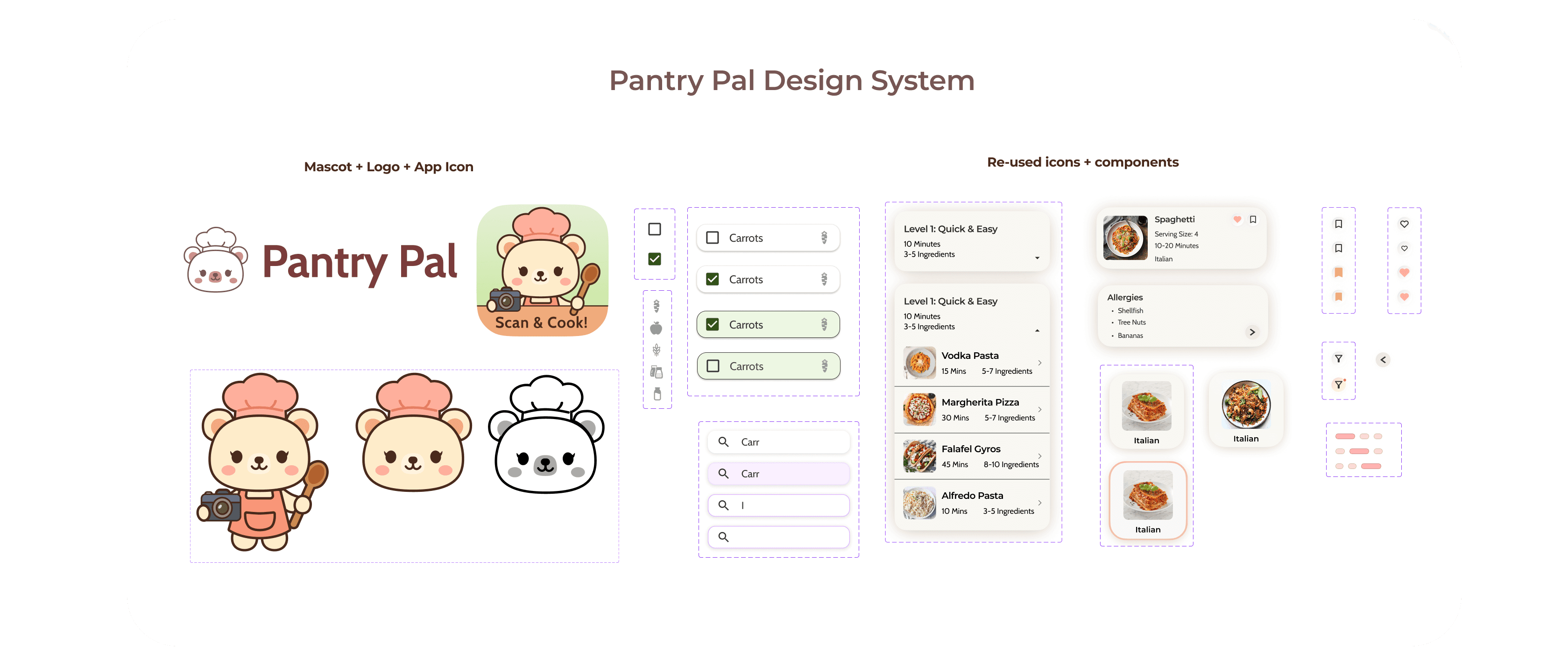
From pantry to palette.
Mapping the user flow.
Based on research, Pantry Pal users prioritize quick access to nearby food and saving reliable information for later use. The user journey begins with a simple onboarding process, followed by discovering food pantries, viewing pantry details, saving locations, and revisiting saved resources for future planning.
Based on research, Pantry Pal users prioritize quick access to nearby food and saving reliable information for later use. The user journey begins with a simple onboarding process, followed by discovering food pantries, viewing pantry details, saving locations, and revisiting saved resources for future planning.
User Testing and Iteration
User Testing and Iteration
Let's iterate!
Let's iterate!
After user testing, we received feedback that the navbar felt empty and the labels were confusing. Edits were made to simplify the design, since our first version was problematic, making the interface clearer and easier to use.
After user testing, we received feedback that the navbar felt empty and the labels were confusing. Edits were made to simplify the design, since our first version was problematic, making the interface clearer and easier to use.
Recipe Level Page
Recipe Level Page
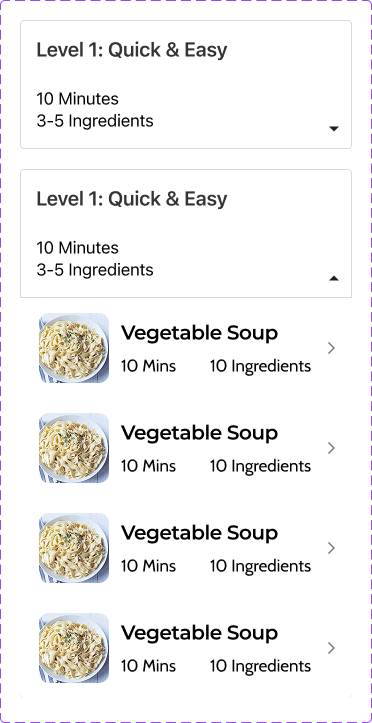

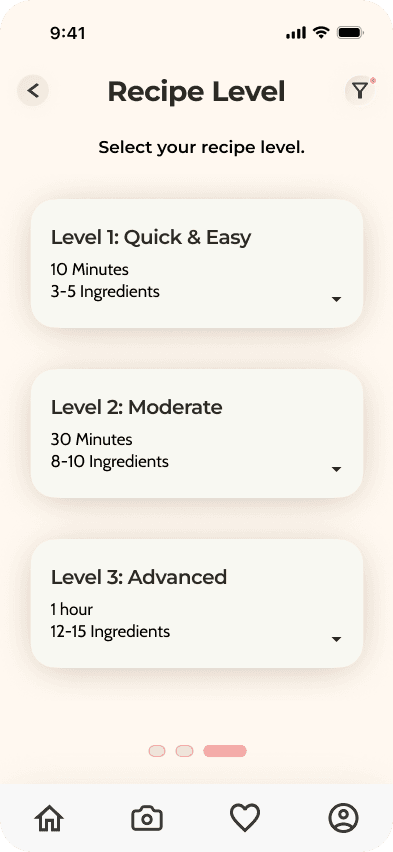
Instead of a separate pop-up for Level 1 recipes, we use one accordion. Clicking the arrow expands the section to show the recipe details—like name, ingredients, and prep time—based on the selected recipe level.
Instead of a separate pop-up for Level 1 recipes, we use one accordion. Clicking the arrow expands the section to show the recipe details—like name, ingredients, and prep time—based on the selected recipe level.
Filter Options Pop-up
Filter Options Pop-up
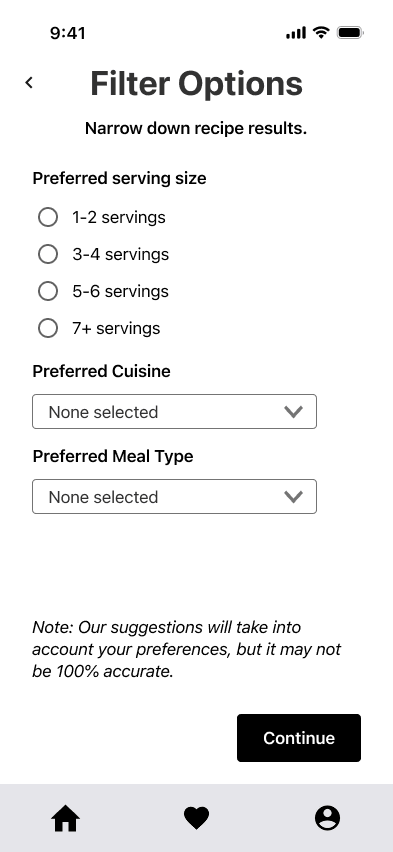
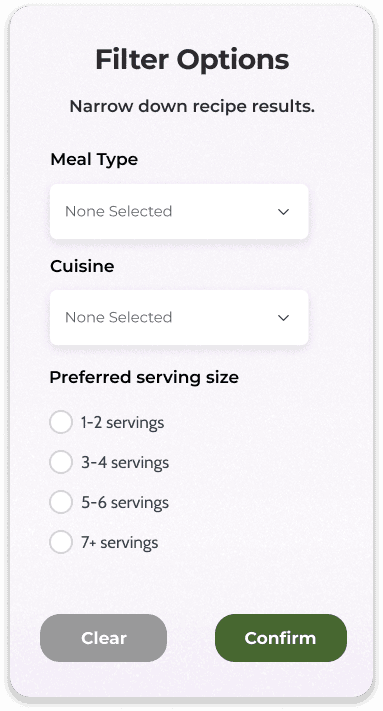
To reduce screen clutter, we consolidated all filter options into a single pop-up. This allowed users to quickly adjust preferences without leaving the page, resulting in a cleaner layout and faster decision-making.
To reduce screen clutter, we consolidated all filter options into a single pop-up. This allowed users to quickly adjust preferences without leaving the page, resulting in a cleaner layout and faster decision-making.
What changes to the user flow help users move faster from onboarding to actionable food information?
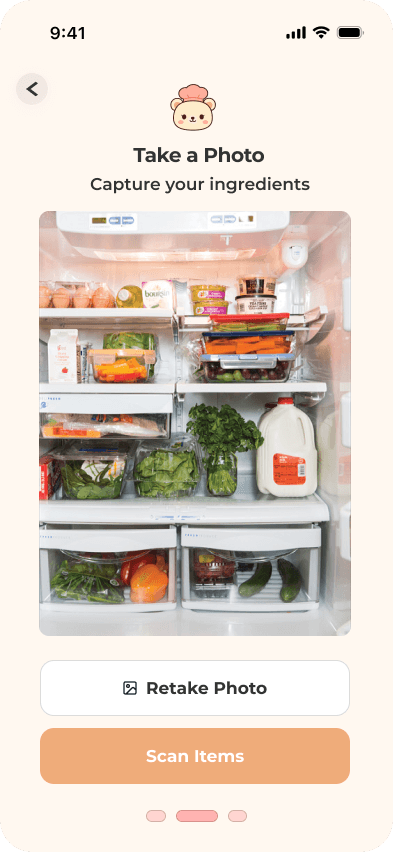
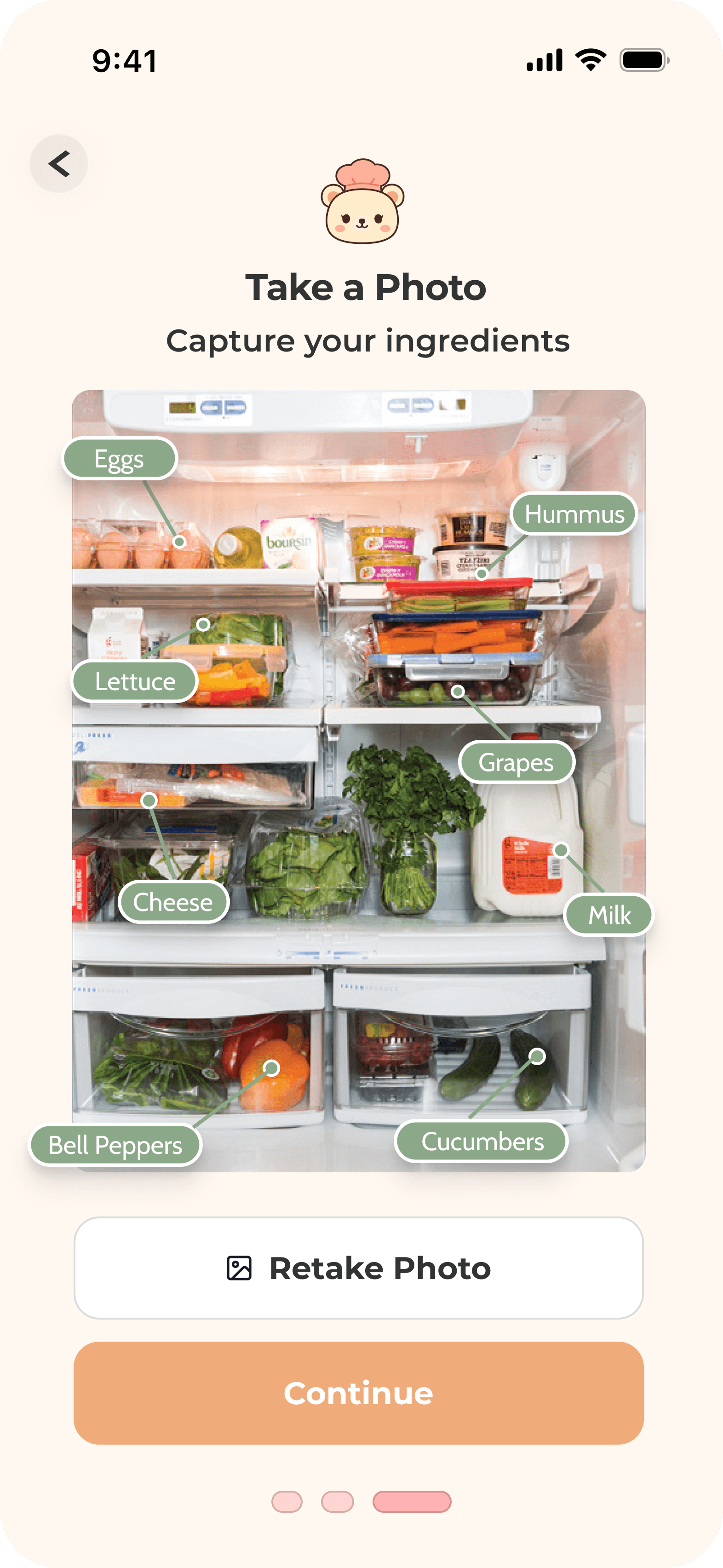
Based on user feedback, we added visual labels to scanned item images so users could quickly see what ingredients they have and what they’re missing. This made fridge scanning faster, reduced extra taps, and helped users plan meals more easily.
Based on user feedback, we added visual labels to scanned item images so users could quickly see what ingredients they have and what they’re missing. This made fridge scanning faster, reduced extra taps, and helped users plan meals more easily.